
The Paris Agreement
Updated 16, September 2026 | by Lydia Brearley
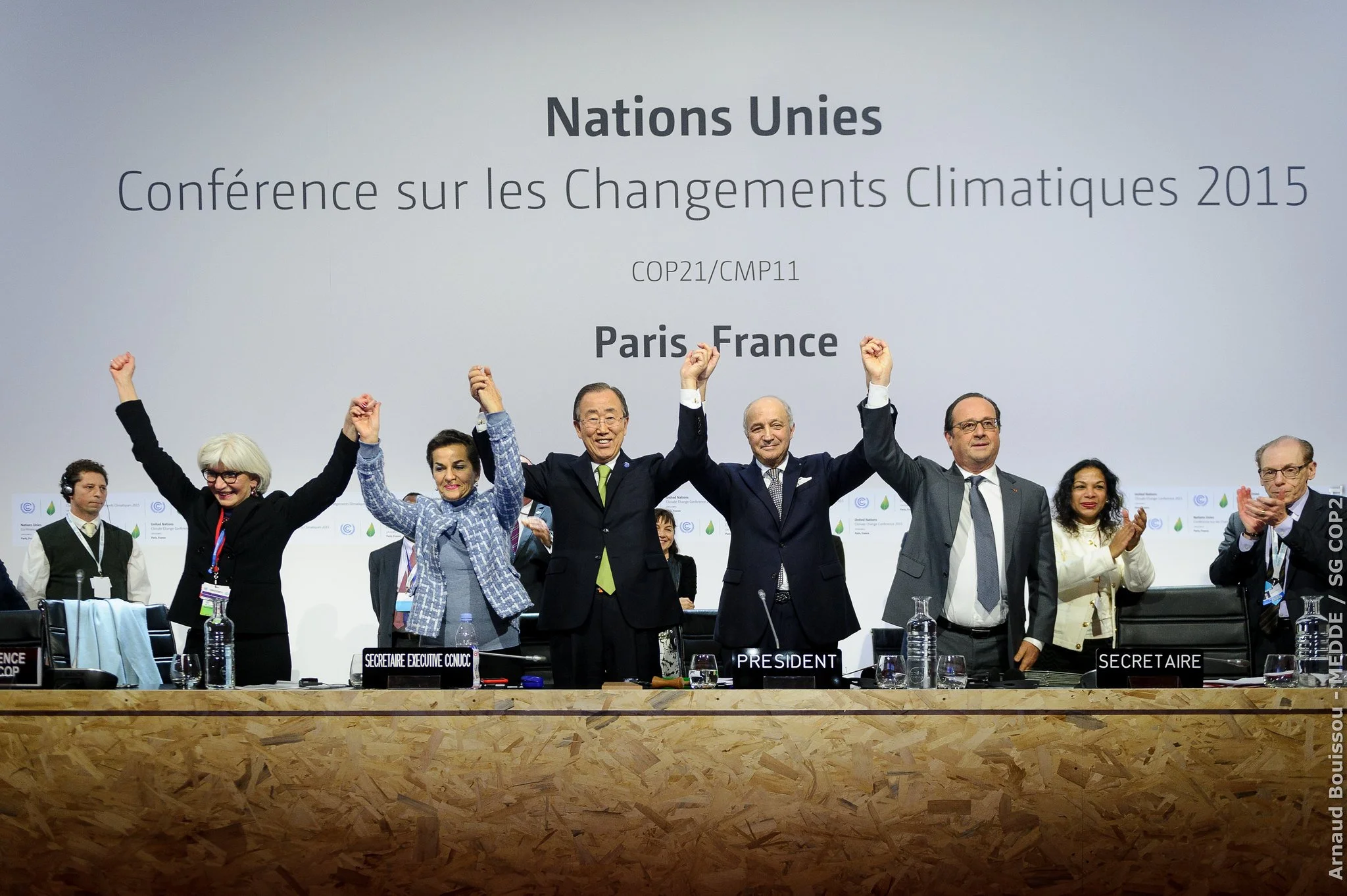
What is the Paris Agreement?
The Paris Agreement is a global agreement where countries work together to fight climate change.
It aims to limit global warming by reducing greenhouse gas emissions.
It was adopted by 195 Parties at the UN Climate Change Conference (COP21) in Paris, France, on 12 December 2015.
It was created through the United Nations and is part of the United Nations Framework Convention on Climate Change (UNFCCC).
Why is it important for fashion?
The fashion industry produces high levels of pollution, carbon emissions, and waste.
The Paris Agreement matters for fashion because it:
→ Encourages brands to cut carbon emissions
→ Pushes for cleaner energy and production
→ Supports more sustainable materials
→ Promotes responsible supply chains
→ Many fashion companies now set “climate targets” because of this agreement.
Background and Context
Before the Paris Agreement, countries struggled to agree on strong climate action.
In 2015, governments came together to create one shared plan to protect the planet.
For the first time, almost every country agreed to take responsibility for climate change.
This made the Paris Agreement a major step forward in global environmental policy.
Timeline and Key Dates
1992 – UNFCCC is created
2015 – Paris Agreement is adopted in Paris
2016 – Agreement officially entered into force on 6th November 2016.
2020 – Countries begin reporting climate plans
2020 - The US resigned from The Paris Agreement
2021 - The US rejoined The Paris Agreement under President Biden
2023 – First global progress review
2025 - January 2025 US Presidency resigned from The Paris Agreement
NOTE: Countries update their climate goals every five years
Current Status
Currently, as of 27 January 2026, there are 194 Parties to the Paris Agreement.
Many governments and businesses, including fashion brands, are working to meet its goals. However, progress is slow, and emissions are still rising in many places
Further Reading and Official Sources
→ United Nations Climate Change (UNFCCC) website
→ United Nations Paris Agreement page
→ Intergovernmental Panel on Climate Change (IPCC) reports
→ Fashion Industry Charter for Climate Action